

 862 Customer Reviews
As we all know, HR form many companies hold the view that candidates who own a Professional-Cloud-Architect professional certification are preferred, because they are more likely to solve potential problems during work. And the Professional-Cloud-Architect certification vividly demonstrates the fact that they are better learners. As for candidates who possessed with a Professional-Cloud-Architect professional certification are more competitive. The current word is a stage of science and technology, social media and social networking has already become a popular means of Professional-Cloud-Architect exam materials. As a result, more and more people study or prepare for exam through social networking. By this way, our Professional-Cloud-Architect learning guide can be your best learn partner.

Practice Exam Mode to Build Up Your Confidence
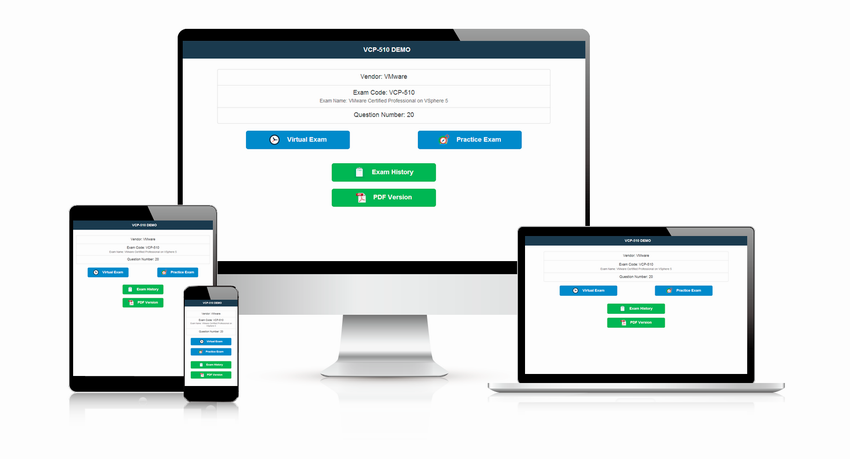
Thanks to modern technology, learning online gives people access to a wider range of knowledge, and people have got used to convenience of electronic equipment. As you can see, we are selling our Professional-Cloud-Architect learning guide in the international market, thus there are three different versions of our Professional-Cloud-Architect exam materials which are prepared to cater the different demands of various people. It is worth mentioning that, the simulation test is available in our software version. With the simulation test, all of our customers will get accustomed to the Professional-Cloud-Architect exam easily, and get rid of bad habits, which may influence your performance in the real Professional-Cloud-Architect exam. In addition, the mode of Professional-Cloud-Architect learning guide questions and answers is the most effective for you to remember the key points. During your practice process, the Professional-Cloud-Architect test questions would be absorbed, which is time-saving and high-efficient.
Exam Topics
The certification exam covers six domains. Each of them has a list of subtopics that the applicants should understand before taking the test. To develop competence in the content, it is recommended that you spend some time going over the exam guide and taking some practice tests. Below are the details of the subjects covered in the Google Professional Cloud Architect exam:
Designing & Planning Cloud Solution Architectures
- Design a solution infrastructure that fulfills the technical prerequisites: the candidates must demonstrate their understanding of Cloud resources elasticity; failover design and high availability; latency and performance; scalability to fulfill growth needs;
- Create a migration plan: the students should be able to integrate the solution with current systems; migrate data and systems to support solutions; license mapping; test and proof concepts; network planning; dependency management strategy;
- Envision future solutions enhancements: the individuals should understand the technology and Cloud improvements; evangelism and advocacy; business requirements evolution.
- Design network, compute, and storage resources: this covers one’s competence in selecting data processing technologies, relevant storage types, and compute resources; integration with multi-Cloud/on-premises environments; Cloud-native networking; mapping compute requirements for platform products;
- Design a solution infrastructure that fulfills the business prerequisites: this covers skills in cost optimization; product strategy and business use cases; integration with the external systems; supporting application designs; build-buy-or-modify; design decision trade-off; data movement; observability and compliance; success measurements;
Reference: https://cloud.google.com/certification/cloud-architect
In Conclusion
Taking the Google Professional Cloud Architect exam is a big step towards career in the cloud sphere. The associated certification brings new prospects, including high-paying roles and promotions. Make use of a great collection of books from Amazon and official courses to get ready for the test and improve your professional path.
Google Professional Cloud Architect Prerequisites
There are no official prerequisites for taking the Professional Cloud Architect exam, except passing a single qualifying exam. However, it is recommended that the candidates have about three years of practical experience, including one year of designing and managing solutions with the help of Google Cloud Platform.
Experienced Experts to Develop Professional-Cloud-Architect Study Materials
With all this reputation, our company still take customers first, the reason we become successful lies on the professional expert team we possess, who engage themselves in the research and development of our Professional-Cloud-Architect learning guide for many years. So we can guarantee that our Professional-Cloud-Architect exam materials are the best reviewing material. Concentrated all our energies on the study Professional-Cloud-Architect learning guide we never change the goal of helping candidates pass the exam. Our Professional-Cloud-Architect test questions' quality is guaranteed by our experts' hard work. So what are you waiting for? Just choose our Professional-Cloud-Architect exam materials, and you won't be regret.
High level of Service
Learning with our Professional-Cloud-Architect learning guide is quiet a simple thing, but some problems might emerge during your process of Professional-Cloud-Architect exam materials or buying. Considering that our customers are from different countries, there is a time difference between us, but we still provide the most thoughtful online after-sale service twenty four hours a day, seven days a week, so just feel free to contact with us through email anywhere at any time. Our commitment of helping you to pass Professional-Cloud-Architect exam will never change. Considerate 24/7 service shows our attitudes, we always consider our candidates' benefits and we guarantee that our Professional-Cloud-Architect test questions are the most excellent path for you to pass the exam.
Google Professional-Cloud-Architect Exam Syllabus Topics:
| Section | Objectives |
|---|---|
| Manage implementations of cloud architecture | - Ensure solution reliability and operational excellence - Manage deployment and production systems |
| Manage and provision the solution infrastructure | - Automate infrastructure deployment - Provision compute, storage, and network resources |
| Analyze and optimize technical and business processes | - Monitor, log, and optimize system performance - Optimize cost and resource usage |
| Design and plan a cloud solution architecture | - Design for reliability, scalability, and availability - Design Google Cloud solutions based on business requirements - Plan security and compliance requirements |
| Design for security and compliance | - Implement identity and access management (IAM) - Configure data protection and encryption |
Google Certified Professional - Cloud Architect (GCP) Sample Questions:
Your company captures all web traffic data in Google Analytics 260 and stores it in BigQuery. Each country has its own dataset. Each dataset has multiple tables. You want analysts from each country to be able to see and query only the data for their respective countries.
How should you configure the access rights?
- A. Create a group per country. Add analysts to their respective country-groups. Create a single group
'all_analysts', and add all country-groups as members. Grant the 'all-analysis' group the IAM role of BigQuery jobUser. Share the appropriate tables with view access with each respective analyst countrygroup. - B. Create a group per country. Add analysts to their respective country-groups. Create a single group
'all_analysts', and add all country-groups as members. Grant the 'all-analysis' group the IAM role of BigQuery dataViewer. Share the appropriate table with view access with each respective analyst countrygroup. - C. Create a group per country. Add analysts to their respective country-groups. Create a single group
'all_analysts', and add all country-groups as members. Grant the 'all-analysis' group the IAM role of BigQuery jobUser. Share the appropriate dataset with view access with each respective analyst country- group. - D. Create a group per country. Add analysts to their respective country-groups. Create a single group
'all_analysts', and add all country-groups as members. Grant the 'all-analysis' group the IAM role of BigQuery dataViewer. Share the appropriate dataset with view access with each respective analyst country-group.
Correct Answer: C 🗳️
Your company has an application running as a Deployment in a Google Kubernetes Engine (GKE) cluster When releasing new versions of the application via a rolling deployment, the team has been causing outages The root cause of the outages is misconfigurations with parameters that are only used in production You want to put preventive measures for this in the platform to prevent outages What should you do?
- A. Create a Scheduled Task to check whether the application is available
- B. Configure liveness and readiness probes in the Pod specification
- C. Configure health checks on the managed instance group
- D. Configure an uptime alert in Cloud Monitoring
Correct Answer: C 🗳️
Explanation: Only visible for TestkingPDF members. You can sign-up / login (it's free).
You have deployed an application to Kubernetes Engine, and are using the Cloud SQL proxy container to make the Cloud SQL database available to the services running on Kubernetes. You are notified that the application is reporting database connection issues. Your company policies require a post-mortem. What should you do?
- A. Validate that the Service Account used by the Cloud SQL proxy container still has the Cloud Build Editor role.
- B. In the GCP Console, navigate to Cloud SQL. Restore the latest backup. Use kubect1 to restart all pods.
- C. Use gcloud sql instances restart.
- D. In the GCP Console, navigate to Stackdriver Logging. Consult logs for Kubernetes Engine and Cloud SQL.
Correct Answer: D 🗳️
You are configuring the cloud network architecture for a newly created project m Google Cloud that will host applications in Compote Engine Compute Engine virtual machine instances will be created in two different subnets (sub-a and sub-b) within a single region
* Instances in sub-a win have public IP addresses
* Instances in sub-b will have only private IP addresses
To download updated packages, instances must connect to a public repository outside the boundaries of Google Cloud You need to allow sub-b to access the external repository. What should you do?
- A. Enable Identity Aware Proxy for TCP forwarding for instances in sub-b
- B. Enable Private Google Access on sub-b
- C. Configure Cloud NAT and select sub b m the NAT mapping section
- D. Configure a bastion host instance in sub a to connect to instances in sub-b
Correct Answer: C 🗳️
Explanation: Only visible for TestkingPDF members. You can sign-up / login (it's free).
You have a Python web application with many dependencies that requires 0.1 CPU cores and 128 MB of memory to operate in production. You want to monitor and maximize machine utilization. You also to reliably deploy new versions of the application. Which set of steps should you take?
- A. Perform the following:
1) Create a managed instance group with n1-standard-1 type machines.
2) Build a Compute Engine image from the production branch that contains all of the dependencies and automatically starts the Python app.
3) Rebuild the Compute Engine image, and update the instance template to deploy new production releases. - B. Perform the following:
1) Create a Kubernetes Engine cluster with n1-standard-1 type machines.
2) Build a Docker image from the production branch with all of the dependencies, and tag it with the version number.
3) Create a Kubernetes Deployment with the imagePullPolicy set to "IfNotPresent" in the staging namespace, and then promote it to the production namespace after testing. - C. Perform the following:
1) Create a Kubernetes Engine (GKE) cluster with n1-standard-4 type machines.
2) Build a Docker image from the master branch will all of the dependencies, and tag it with "latest".
3) Create a Kubernetes Deployment in the default namespace with the imagePullPolicy set to "Always".
Restart the pods to automatically deploy new production releases. - D. Perform the following:
1) Create a managed instance group with f1-micro type machines.
2) Use a startup script to clone the repository, check out the production branch, install the dependencies, and start the Python app.
3) Restart the instances to automatically deploy new production releases.
Correct Answer: C 🗳️
Explanation: Only visible for TestkingPDF members. You can sign-up / login (it's free).
Viewing page 1 out of 71 pages.
Viewing questions 1-5 out of 353 questions.




Marsh -
I bought the Professional-Cloud-Architect study guide last week, now i'm confident in the approaching exam.